
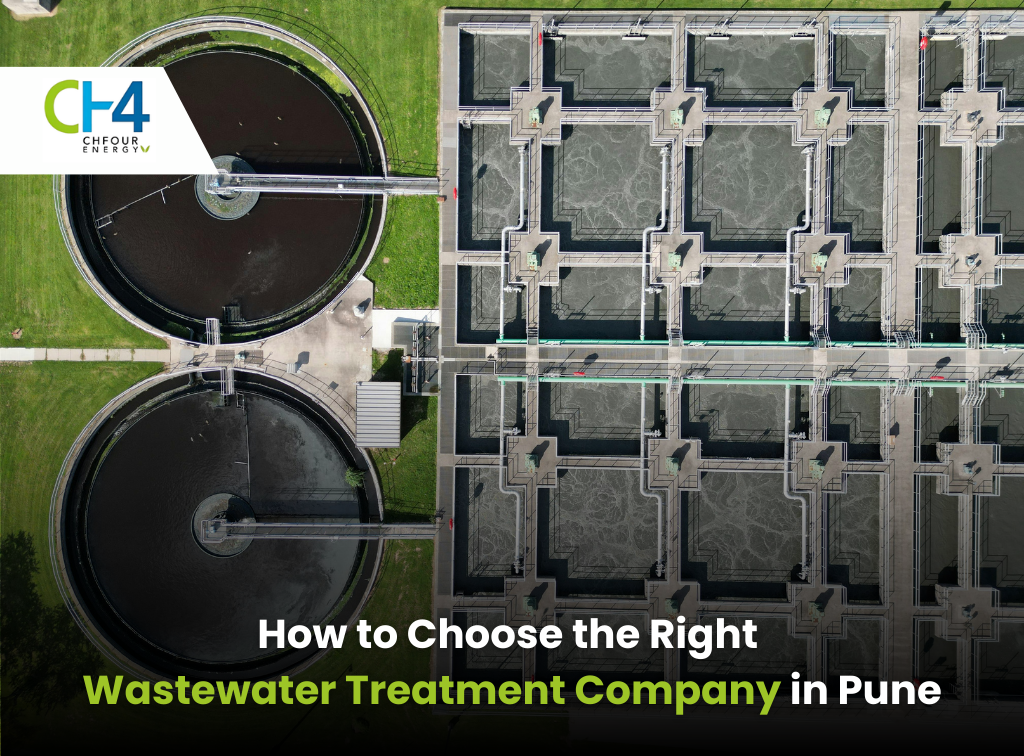
How to Choose the Right Wastewater Treatment Company in Pune
Pune, a fast-evolving city fondly known as the hub of commercialization & industrialization, faces increasing wastewater management challenges due to urbanization and industrial expansion. With stringent environmental norms and regulations and the need for sustainable water solutions, it’s imperative to select the appropriate Waste Water Treatment Plant manufactured by Waste Water Treatment Companies in Pune, which is crucial for residential complexes & societies, commercial spaces, and industries. Choosing the right Waste Water Treatment Plant involves prioritizing firms with local expertise that offer custom, energy-efficient Waste Water Treatment Services, such as STP/ETP solutions, coupled with a strong maintenance support system. The main factors are evaluating their experience with similar setups (residential vs. industrial), technology (MBBR/SAFF), space efficiency, & compliance with PCB regulations. This’s where CH Four Energy Solutions, one of the prime Waste Water Treatment Companies in Pune, comes into the picture! By manufacturing wastewater treatment plants, CH Four efficiently handles industrial recycling of treated sewage/wastewater, balancing environmental benefits, industry, and the public at large. Why Pune Requires a Reliable & Efficient Waste Water Treatment Company Highly regarded as the hub of real estate, IT parks, industries, and educational institutions, Pune regularly generates a substantial volume of sewage. Without appropriate treatment, wastewater may result in: All these make it necessary to choose CH Four for efficient, sustainable, and compliant Waste Water Treatment Services. Key Factors to Consider When Opting for the Right Waste Water Treatment Companies in Pune, CH Four being counted as your go-to-solution, ensuring efficient wastewater treatment, regulatory compliance, and long-term cost savings: Experience & Reputation – Opt for a manufacturer, having a proven track record in wastewater treatment, and being a pro in successfully installing STP/ETP for residential societies, commercial establishments/buildings, and industries in Pune. Technology & Treatment Procedure – Wastewater treatment plants employ technologies to provide varying levels of treatment efficacy via updated methods like: Prefabricated Versus Conventional STP/ETP – A packaged (prefabricated) STP/ETP is often a better choice than conventional concrete STPs/ETPs for: Compliance With Environmental Rules & Regulations – Wastewater treatment plants should comply with the MPCB (Maharashtra Pollution Control Board) norms and CPCB (Central Pollution Control Board) guidelines. A certified STP/ETP manufacturer like CH Four ensures: Cost & Return On Investment (ROI) – While initial investment is significant, long-term operational expenses must also be considered. A high-end Waste Water Treatment Plant manufactured by our company renders good quality Waste Water Treatment Services, which can save money by: Post-Sales Support & Maintenance Services – A well-maintained STP/ETP entails consistency in performance and compliance. Opt for vendors providing robust after-sales service, AMC (Annual Maintenance Contract), and operator training. Keep a check if the Waste Water Treatment Companies in Pune offer: Customization/Personalization & Scalability – Every project has unique wastewater treatment requirements. The best STP/ETP manufacturer, being a renowned name, must impart: Steps to Be Taken by the Best Waste Water Treatment Company Define Needs, determine if you require an Effluent Treatment Plant (ETP) for industry, or a Sewage Treatment Plant (STP) for residential/commercial, and calculate regular capacity. Research & Shortlist Identify companies like CH Four, having strong reputations and local experience in Pune. Evaluate/Assess Proposals Compare proposals in keeping with technology, installation, energy consumption, & long-term expenses. Check References Verify the performance of their installed mechanisms by visiting local sites. Our Company, a pro in manufacturing wastewater treatment plants in Pune, Maharashtra, India, serves under the Maharashtra Pollution Control Board (MPCB)-a stringent regulatory body tackling wastewater treatment in Maharashtra. Key Aspects of MPCB Compliance Commonly Required Documents & Actions Key Aspects of CPCB Norms Do you know a lot of chemicals are used in the water and you must be worried if it is safe for consumption or not. Read our blog on “How Municipal Water Treatment Chemicals Ensure Safe Water” to know more about it. Nevertheless, CH Four Energy Solutions, one of the prominent Waste Water Treatment Companies in Pune, hires the MPCB Liaison Services for the following reasons: Get in touch with CH Four Energy Solutions & Get Your Problems Sorted Once and For All! Connect with Our Specialists Via Email at info@chfour.net