
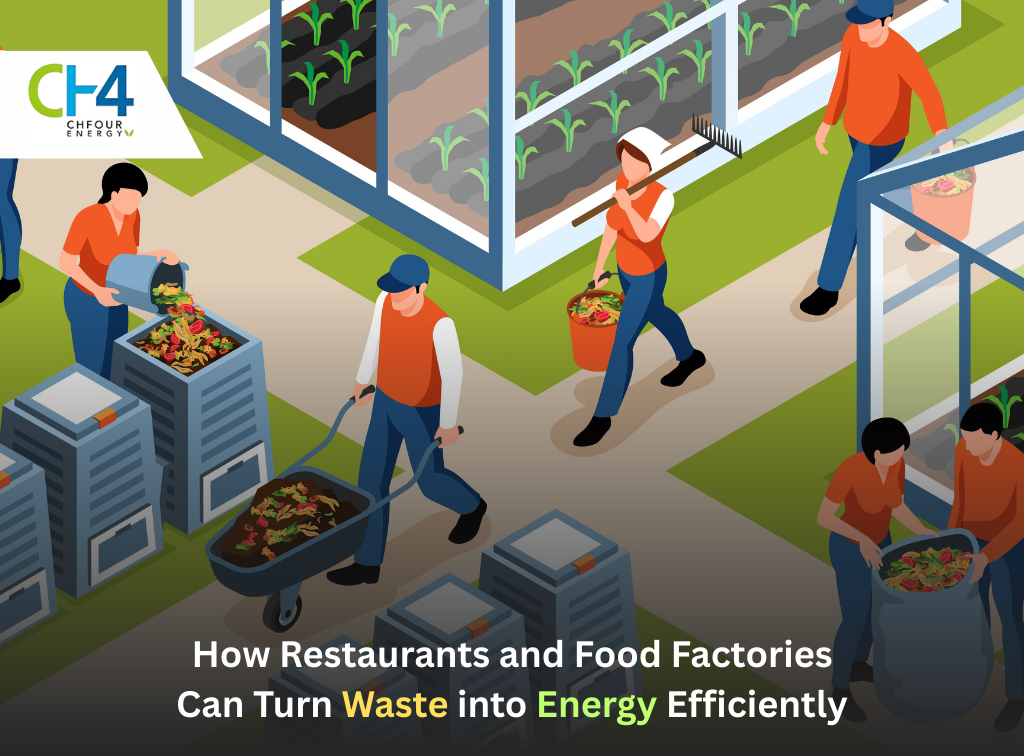
Converting food waste into energy efficiently is touted as a sustainable solution that makes the most of food waste, primarily generated by restaurants and food factories, rather than allowing it to decompose in a landfill. In fact, modern technologies, and innovations, such as the Food Waste Biogas Plant and others, demonstrate that there are varied ways for food waste to be converted into a renewable source of energy. However, when food waste ends up in a landfill, it breaks down, releasing the highly potent, toxic methane gas, which traps heat in the atmosphere, contributing to global warming. Nevertheless, procedures for turning food waste into efficient energy via a Food Waste Biogas Plant still produce the menacing methane. Still, they capture and control the gas, employing it to generate energy. And the onus is primarily on restaurants and food factories to convert their food waste into energy that benefits the environment and retains its efficacy.
Being earmarked as one of the leading Food Waste Biogas Plant manufacturers in Pune, Maharashtra, India, CH Four Energy Solutions emphasizes the importance of waste treatment across environmental, industrial, hospitality & other sectors, providing a hassle-free, seamless experience and offering immaculate waste treatment solutions and services.
Let us have a look at how restaurants and food factories convert food waste into energy efficiently, benefiting greatly in all aspects of ‘Life’.
Essential Ways Restaurants & Food Factories Turn Food Waste into Energy Efficiently
Some of the essential ways restaurant and food factories turn food waste into energy efficiently are as follows.
Anaerobic Digestion (AD)
Collection & Pre-treatment – Food scraps, fats, and used oils are accumulated, often separating from packaging, ground, and mixed into a slurry.
Digestion – The slurry enters sealed, oxygen-free tanks known as digesters, where bacteria decompose the organic material over a period of days/weeks.
Biogas Production – This breakdown tends to release methane-rich biogas and carbon dioxide.
Energy Conversion/Generation – The biogas is captured, purified into Renewable Natural Gas (RNG), and employed to power generators for electricity, heat buildings, or fuel vehicles such as buses. Similarly, used cooking oils are refined into biodiesel, a renewable, clean-burning diesel fuel made from plant oils like soy, rapeseed, algae, or animal fats/recycled cooking oil, which is used in most diesel engines, offering energy security and environmental benefits.
Digestate – The residual liquid and solid (digestate) is a valuable organic fertilizer for agricultural purposes.
Combustion/Incineration
Procedure – Food waste, sometimes fused with other biomass, is burned in a controlled environment, making it a renewable source of energy used for cooking, electricity, or vehicle fuel, simultaneously capturing energy and minimizing landfill waste.
Energy Output – Heat generated produces steam, driving turbines for electricity or provides direct heat.
Pyrolysis & Gasification
Process – Waste is heated in the absence of oxygen (pyrolysis) or with limited oxygen (gasification), converting it into syngas (a fuel gas), bio-oil, and biochar, which are used efficiently for energy.
Biodiesel Production
Procedure – Used cooking oils and fats are filtered, refined & purified, and processed.
Energy Output-Transformed into clean-burning biodiesel employed for vehicles and machinery, minimizing reliance on fossil fuels.
Other Technologies & Applications/Usages
Microbial Fuel Cells – Make the usage of microbes for generating electricity directly from waste.
Bioethanol Fermentation – Metamorphoses sugars in waste into ethanol fuel via Food Waste Biogas Plant.
Benefits for Restaurants & Food Factories
Reduced Landfill – Diverts significant volumes of food waste from landfills, cutting down disposal expenses, and environmental hazards and impacts.
Renewable Energy – Creates a reliable source of green energy, lowering utility bills and reducing carbon footprints.
Circular Economy – Converts waste into relevant resources like energy and fertilizers, supporting sustainable objectives.
Sustainable Practices – Supports zero-waste goals and accentuates green credentials, appealing to eco-conscious customers.
CH Four Energy Solutions-prominent name in Food Waste Biogas Plant manufacturing in Pune, Maharashtra, India, operates under the Maharashtra Pollution Control Board (MPCB), which is responsible for managing food waste biogas plants and ensuring compliance with environmental standards, specifically the Solid Waste Management Rules & Water/Air Acts. MPCB generally categorizes such units under orange or green categories, depending on the scale and waste type, and requires operators to obtain consent to establish and operate. These plants are usually viewed as a sustainable waste-management solution, often needed in commercial establishments/developments for on-site treatment.
Key MPCB Requirements/Criteria & Guidelines for Food Waste Biogas Plant
Some of the Key MPCB requirements and guidelines that need to be followed for the Food Waste Biogas Plant are as follows:
Mandatory Consents (CTE/CTO)
Authorization – Required for setting up waste processing and disposal provisions in accordance with the Solid Waste Management Rules 2016.
Consent to Establish (CTE) – Involves obtaining before starting construction of the biogas plant.
Consent to Operate (CTO) – Entails obtaining before commencing operations. The operator should submit Form I to the MPCB for authorization to process and dispose of waste.
Operational & Technical Compliance
Segregation – Food Waste Biogas Plant should ensure proper segregation of wet (food) waste, as it is critical to smooth functioning.
Capacity & Location – Land requirements vary, for instance, 300-1000 sq. meters for 1-10 tonne plants.
Treatment Standards – Plant should manage sludge/slurry, frequently employing sludge drying beds for producing manure.
Gas Handling – If applicable, the industry must provide H2S scrubbers for sulphur recovery from biogas.
Air Pollution Control – Sufficient stack height, for example, 3 meters, for DG sets or boilers, as per CPCB norms.
Monitoring & Reporting
Online Monitoring/Surveillance – For larger food waste biogas plants, online monitoring system installations for parameters like pH, Flow, BOD, and TSS are needed.
Quarterly Statements-Operators need to submit quarterly statements about compliance with consent conditions.
Waste Tracking – Waste quantities records & disposal methods should be maintained.
General Conditions
Environmental Cell – The industry must comprise an Environmental Cell for monitoring daily compliance.
Green Region – Provisions/amenities for odour control and maintaining the green belt surrounding the facility are required.
Bank Guarantee (BG) – MPCB often requires a Bank Guarantee, for instance, Rs. 10 lakhs, to comply with stipulated conditions/scenarios.
For specified projects, particularly large-scale commercial Food Waste Biogas Plant, it is advisable to apply via MPCB online portal MAITRI.
However, the MPCB Liaison Services hired by CH Four Energy Solutions are for the following reasons:
Expert Guidance – Liaison professionals advise on compliance with food wastes, industrial wastewater & contaminant control.
Comprehensive & Seamless Documentation – Manages things like applying for MPCB consents & licenses, preparing extensive reports, compiling site plans, etc.
Proactive Risk Mitigation – Identify potential risks & compliance gaps preventing serious outcomes.
Effortless Coordination – Coordinates with organisation’s officials, presenting causes clearly, addressing inquiries promptly, and following up on application problems.
Continuous Compliance Monitoring – Excel at constant surveillance of the company’s compliance, performing audits & inspections, handholding every stage of the journey, making one sustainably compliant.
Pollution & Contaminant Control & Managing Guidance – Encompass pollution & contaminant control rules, implementing effective pollution & contaminant control measures.
Focus on Core Business – Handle environmental & pollution control compliance on one’s behalf in industrial waste treatment like Food Waste Biogas Plant, making one focus on their energies on other crucial business aspects.
Nevertheless, CH Four ensures regulatory compliance, offering remarkable long-standing economic and reputational advantages, with Effluent Treatment Plant (ETP) as a strategic investment that adheres to Central Pollution Control Board (CPCB) norms for ETP, including Effluent Discharge Standards, Treatment Requirements, Industries Categorization, & Reuse & Recycling Industries.
Prep Yourself Up for CH Four Energy Solutions & Get Your Desired Outcomes!
Contact with Our Specialists through Email at info@chfour.net