
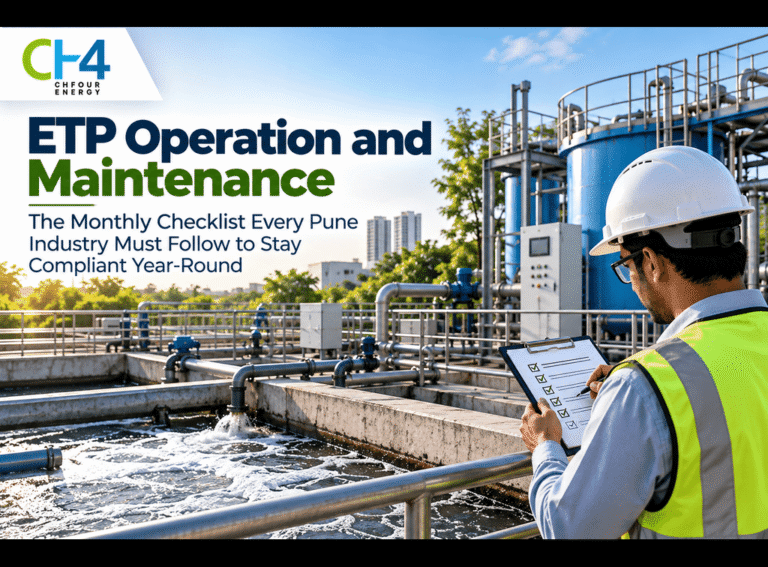
Installing an Effluent Treatment Plant is only the first step. Staying compliant depends on how well it is run every single day. Most failures we see come from missed checks and poor records, not from poor design. A good Effluent Treatment Plant in Pune has to meet MPCB norms in every inspection. This blog gives you a clear monthly routine to follow. CH Four Energy Solutions built it from our work on industrial plants. Use it as a working document for your operator and your compliance team.
Why ETP Operation and Maintenance Decides Your Compliance
Compliance is built through routine, so it helps to see where problems begin.
Where Compliance Failures Start
Failures rarely happen overnight. A blower runs low for weeks. Dosing pumps drift off setting. Sludge builds up in the clarifier. Each small gap lowers treatment quality. By the time outlet samples fail, the cause is already old.
What MPCB Inspections Look At
Officers check outlet quality, running condition, and records. They compare your logs with sample results. They also check that the plant runs as stated in your consent to operate. Missing registers can count against you even when the water is clean.
Daily and Weekly Checks
Small habits keep the plant stable between monthly reviews.
Daily Readings to Log
Record flow, pH, dissolved oxygen, and sludge level every day. Note any odour, foam, or colour change. These readings show a problem early. They also give you proof of control during audits. Keep the log sheet at the plant so entries are made on the spot.
Weekly Equipment Walk-Round
Walk the plant once a week. Check pumps, blowers, and dosing units for noise, heat, and leaks. Test the sample points and clean the screens. Fix small faults before they stop the plant.
The Monthly ETP Maintenance Checklist
Split the monthly work into four weeks so nothing gets skipped.
Week One Mechanical Inspection
Inspect motors, bearings, belts, and gearboxes. Grease moving parts as per the maker schedule. Check valves and pipe supports. Replace worn parts now, not after a breakdown.
Week Two Biological Review
Review MLSS, sludge age, and the food to microorganism ratio. Look at the colour and smell of the aeration tank. Check for foaming and poor settling. Adjust sludge wasting and nutrient dosing where needed. Small changes made early prevent large upsets later.
Week Three Chemical Dosing and Lab Checks
Confirm dosing rates for coagulants, polymers, and pH correction chemicals. Calibrate dosing pumps. Test inlet and outlet samples for BOD, COD, TSS, and pH. Compare results with your consent limits.
Week Four Sludge and Records
Check the filter press and sludge drying area. Record the quantity of sludge generated and sent out. Keep disposal receipts from authorised handlers. Close the month by reviewing every log for gaps.
Quarterly and Annual Tasks
Some jobs only come around a few times a year, and they matter just as much.
Tank Cleaning and Diffuser Checks
Clean tanks on a fixed schedule. Inspect diffusers for clogging and membrane damage. Poor aeration is a common reason for odour and high COD. Write down the date and findings after each cleaning.
Calibration and Third Party Testing
Calibrate pH meters, flow meters, and online monitors. Send samples to an approved laboratory for independent results. Keep every report in the audit file.
Staying Compliant With MPCB in Pune
Pune industries must match their daily practice with their consent conditions.
Records You Must Maintain
Keep registers for operating hours, chemical use, power use, sludge disposal, and test results. Make sure entries are dated and signed. An inspector should find any record within minutes. A well kept Effluent Treatment Plant in Pune shows its history clearly. Store scanned copies as a backup.
Returns and Statements
File the required returns and the annual environmental statement on time. Track consent renewal dates. Keep copies of every submission. Late filing creates avoidable problems.
Common Problems and Quick Fixes
Most ETP faults give a warning sign before they turn serious.
Odour, Foam, and Poor Settling
Odour usually points to low oxygen. Foam points to loading or sludge age. Poor settling points to bulking sludge. Check aeration and MLSS first.
Sudden Rise in COD or Colour
A sudden rise often follows a change in the process stream. Check the equalisation tank and recent production changes. Review the biological stage before changing chemicals.
In-House Team or O&M Partner
Your plant needs trained people, and not every unit can keep them.
What a Good Operator Must Know
An operator should read lab results, understand biology, and handle equipment safely. Training takes time. Staff turnover can undo that effort quickly.
When Outsourcing Makes Sense
Outsourcing helps when you lack skilled staff or face repeated notices. A specialist team brings a fixed routine, records, and quick response. Many plants find a monthly review by outside engineers a useful second pair of eyes. At CH Four Energy Solutions, we run operation and maintenance for industrial plants with trained engineers and clear reporting. Our team keeps your Effluent Treatment Plant inside its limits through the year.
Conclusion
A steady routine keeps an Effluent Treatment Plant compliant. Daily logs, monthly checks, and timely records protect your consent and your production. Industries that follow a fixed schedule face fewer shutdowns and lower repair costs. Working with an experienced partner for your Effluent Treatment Plant in Pune makes this easier.
Talk to CH Four Energy Solutions
Book an ETP health check with CH Four Energy Solutions. We will review your plant, your records, and your consent conditions. Contact our team today at 8055573883 and get your queries answered.