
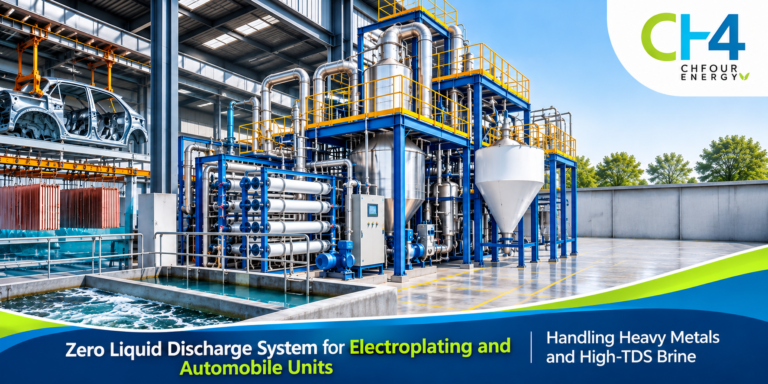
Electroplating and automobile units produce wastewater that is hard to treat. It carries heavy metals and a high salt load together. A standard treatment plant cannot manage both for long. A Zero Liquid Discharge System solves this by recovering water and turning the rest into solids. At CH Four Energy Solutions, we plan and build these systems for metal finishing and auto component plants. This blog explains how a ZLD Plant works for these units and what to check before you invest.
Why Electroplating and Automobile Wastewater Is Hard to Treat
The difficulty starts with what these plants discharge.
Sources in Plating and Auto Component Lines
Plating lines release rinse water from chromium, nickel, zinc, and copper baths. Automobile units add wastewater from pretreatment, phosphating, painting, and machining coolants. Each stream has a different chemistry. Mixing them makes treatment harder. Knowing each stream is the first step toward a workable design. Knowing each stream is the first step toward a workable design.
Why Heavy Metals and High TDS Together Cause Trouble
Heavy metals must be removed before water can be reused. Dissolved salts stay behind after that. They damage membranes and push the TDS beyond discharge limits. Hexavalent chromium and cyanide streams need separate handling from the start.
How a Zero Liquid Discharge System Differs From a Conventional ETP
Many units run an ETP and wonder why it falls short.
The Basic Principle
A conventional ETP treats wastewater and discharges it. A Zero Liquid Discharge System sends no liquid out of the site. Water is recovered and reused. Salts and metals leave only as solids.
Why Metal Finishing Units Face ZLD Directions
Pollution control boards often direct metal finishing units toward ZLD. Heavy metals pose a risk to soil and groundwater. High TDS adds to that load. Consent conditions can also push a plant to adopt ZLD. Auto suppliers may also hear this request from their buyers. Auto suppliers may also hear this request from their buyers.
Treatment Stages in a ZLD Plant for Electroplating Units
A well planned ZLD Plant treats each stream in a set order.
Segregation and Pretreatment
Keep chromium, cyanide, and acid alkali streams apart at source. Reduce chromium to its safer form. Destroy cyanide through oxidation. Then send the streams to the main treatment line.
Precipitation and Filtration
Chemical precipitation turns dissolved metals into solid sludge. Clarifiers and filters separate this sludge from the water. Ion exchange or polishing filters then remove traces of metals. This step protects the membranes ahead. Skipping it shortens membrane life and raises running cost. Skipping it shortens membrane life and raises running cost.
Reverse Osmosis and Evaporation
Reverse osmosis recovers most of the water for reuse. The reject carries the salts. An evaporator and crystallizer concentrate it further. The water that comes out returns to the process.
Managing High TDS Brine and Metal Sludge
Brine and sludge decide the success of the whole system.
Brine Handling and Evaporation Options
High TDS brine comes from the RO reject. Multiple effect evaporators, mechanical vapour recompression, and agitated thin film dryers are common choices. The right pick depends on flow, TDS, and available energy. Effluent testing should come before any choice. Sample results show salt load and scaling risk. Sample results show salt load and scaling risk.
Sludge and Salt Disposal
Metal bearing sludge is hazardous waste. Dewater it and store it safely. Send it only to authorised treatment storage and disposal facilities. Keep manifests and records ready for inspection. Salt residue needs the same careful handling.
ZLD for Automobile and Auto Component Units
Automobile units have a different mix of streams from plating shops.
Phosphating, Paint Shop, and Coolant Effluent
Phosphating lines carry phosphate and metals. Paint shops add organics and solvents. Coolants add oil and grease. Each needs its own pretreatment before the common ZLD line.
Combining Streams in One Scheme
A single ZLD Plant can serve plating and non plating lines when streams are treated separately first. This saves space and cost. It also keeps operation simple. One control room can then run the whole plant. One control room can then run the whole plant.
Cost and Operating Considerations
The budget depends on a few clear factors.
What Drives Capital Cost
Wastewater flow, TDS, metal load, and evaporation technology drive the cost. Energy supply also matters. A detailed effluent study gives a reliable estimate. Fixed quotes without testing often change later. Fixed quotes without testing often change later.
Water Recovery and Payback
Recovered water cuts fresh water purchase. Plants that buy tankers or pay high water rates see this benefit sooner. Chemical and power costs must be counted as well.
Mistakes to Avoid
Most ZLD problems trace back to planning errors.
Mixing Streams and Skipping Characterisation
Mixing streams raises chemical use and sludge. Choosing technology before testing the effluent leads to redesign. Always characterise the effluent first.
Underestimating Brine and Operator Training
Brine volume is often underestimated. Untrained operators also cause membrane and evaporator problems. Plan training from day one.
Choosing the Right ZLD Partner
The right partner reduces risk at every stage.
What to Look For
Look for experience with metal bearing effluent. Ask for effluent testing and pilot trials. Check the support offered after commissioning. At CH Four Energy Solutions, we study your wastewater first, design stream by stream, and support operation after handover.
Conclusion
Electroplating and automobile wastewater needs a planned approach. Segregate streams, remove metals first, recover water, and manage brine carefully. A Zero Liquid Discharge System does this in a controlled way and keeps your plant compliant. A properly designed ZLD Plant also lowers your dependence on fresh water.
Talk to CH Four Energy Solutions
Request an effluent audit or ZLD feasibility study for your plant. Visit chfour.net or contact our team at +91 8055573883 today.